Stepping off a plane at Marrakech-Menara Airport, the first thing that hits you is the light—intense, golden, and promising adventure. However, as you prepare to traverse the varied landscapes of the Maghreb, a common realization sets in: packing for a Morocco road trip is not as simple as tossing a few t-shirts into a suitcase. You might be navigating the breezy ramparts of Essaouira in the morning and shivering under a star-filled sky in the Agafay Desert by nightfall.
This guide provides a roadmap for your luggage. We will explore how to balance cultural respect with climate reality, ensuring you have exactly what you need without overpacking your vehicle. From the winding turns of the High Atlas to the bustling alleys of the Medina, here is how to prepare for the ultimate Moroccan journey.
The Diversity of the Moroccan Climate: A Packing Challenge
One of the most frequent mistakes travelers make is assuming Morocco is universally hot. While the sun is a constant companion, the topography creates dramatic shifts in temperature and environment. If your itinerary includes a drive from Marrakech to Ouarzazate, you will cross the Tizi n’Tichka pass. At an elevation of over 2,200 meters, the air here is crisp, even in mid-summer. Consequently, a light jacket is not just an option; it is a necessity for those frequent photo stops overlooking the valley.
Coastal Breezes vs. Saharan Heat
The Atlantic coast, including cities like Casablanca and Agadir, benefits from a maritime climate that keeps temperatures moderate. In contrast, the interior regions around Marrakech and the dunes of Merzouga experience a dry heat that can soar during the day. However, once the sun sets over the Sahara, the mercury drops rapidly. This thermal amplitude requires a strategy based on versatile layering. Instead of one heavy coat, pack multiple thin layers that can be added or removed as you move between microclimates.
Navigating the Seasons
Seasonality plays a massive role in your logistics. Between November and March, the Moroccan north can be surprisingly rainy, while the Atlas Mountains may even see snow. Conversely, the summer months demand breathable fabrics and high-grade sun protection. Understanding these nuances before you zip your bag ensures you won’t spend your vacation hunting for a sweater in a local souk—unless, of course, you want a beautiful handcrafted wool djellaba as a souvenir.
The Essential Packing List: Clothing and Footwear
When selecting your wardrobe for a Morocco road trip, think about “modest utility.” Morocco is a Muslim country where traditional values are respected, especially in rural villages and holy sites. Choosing clothing that covers shoulders and knees is not only a sign of respect but also a practical defense against the sun. Loose-fitting linens and cottons allow for airflow, keeping you significantly cooler than synthetic “performance” gear that often traps heat against the skin.
The Golden Rule of Layers
Start with a base of lightweight t-shirts or tunics. Add a long-sleeved linen shirt for sun protection during long drives. For the evenings, a pashmina or a light fleece is invaluable. Men should opt for lightweight trousers or chinos rather than short shorts, which are rarely seen outside of beach resorts. For women, long skirts or “palazzo” pants offer the perfect blend of comfort and cultural appropriateness. Furthermore, a wide-brimmed hat and quality sunglasses are non-negotiable items for any desert excursion.
Choosing the Right Footwear
Your choice of shoes can make or break your experience in the Medina. The streets of Marrakech are often uneven, dusty, and crowded. Leave the high heels at home. Instead, bring a pair of sturdy, broken-in walking sandals or lightweight sneakers. If your road trip includes trekking in the Ourika Valley, consider a pair of trail runners with good grip. For the evenings at your riad, a pair of simple flip-flops or local leather babouches will suffice, providing your feet with much-needed relief after a day of exploration.
Tech, Health, and Road Trip Logistics
Modern travel requires a digital backbone, especially when you are on the move. While your private driver will likely know the routes by heart, having your own tech kit allows you to stay connected and capture the scenery. A high-capacity power bank is essential. Even though many modern minivans offer USB ports, a portable charger ensures your phone stays alive during long hikes or camel treks where electricity is a luxury.
Connectivity and Navigation
Consider purchasing a local SIM card (Maroc Telecom or Orange) upon arrival at the airport. Data is affordable and coverage is surprisingly good, even in remote areas of the Atlas. Additionally, downloading offline maps of the regions you plan to visit is a smart backup. For those who enjoy photography, bring extra memory cards. The contrast of the red earth against the blue sky is a palette you will want to capture hundreds of times, and high-resolution files fill up storage quickly.
The Roadside Health Kit
Health and hygiene are paramount when traveling through different regions. While Moroccan pharmacies are excellent and well-stocked, having a small personal kit saves time. Include rehydration salts, as the dry heat can lead to dehydration faster than you realize. Hand sanitizer and biodegradable wet wipes are also vital for those mid-journey stops at rural cafes. Most importantly, bring a high-SPF sunscreen that is “reef-safe” or mineral-based to protect your skin during those long stretches of road where the sun beats through the window.
Distances and Travel Times: Planning Your Days
Understanding the scale of Morocco is vital for a stress-free trip. The roads are generally well-maintained, but the mountainous terrain means that 100 kilometers can take much longer than expected. Below are some typical travel times to help you pace your packing and daily departures.
Common Routes from Marrakech
Marrakech to Essaouira: Approximately 2h 45m. The road is straight and easy, but expect wind upon arrival.
Marrakech to Agafay Desert: About 45 minutes. Perfect for a sunset dinner or a quick overnight stay.
Marrakech to Ouarzazate: Roughly 4 hours. This involves crossing the Atlas Mountains; expect many curves.
Marrakech to Casablanca: 2h 30m via the highway. A fast and efficient transit route.
Always factor in time for “spontaneous stops.” Whether it’s a roadside argan oil cooperative or a panoramic view of a Berber village, the beauty of a road trip lies in the pauses. We recommend leaving early in the morning, typically around 09:00, to reach your destination before the peak afternoon heat and to enjoy the best photographic light.
Why Professional Logistics Matter in Morocco
While some travelers choose to rent a car, many discover that the nuances of Moroccan driving—ranging from mountain passes to navigating urban traffic—can be taxing. Choosing a private driver and transport agency allows you to focus entirely on the landscape. An official agency, licensed by the Ministry of Tourism, provides more than just a ride; it offers security, local knowledge, and a fleet of vehicles designed for the terrain.
The Benefits of an Accredited Agency
Agencies like ours have been operating since 2012, building a reputation for reliability with over 500 verified reviews on travel platforms. When you book a professional transfer, you are guaranteed a vehicle with functioning air conditioning, ample luggage space for all your gear, and a driver who understands the rhythm of the road. Unlike standard taxis, the price is fixed and agreed upon in advance, eliminating the need for stressful negotiations on the sidewalk. This professional approach ensures that your “expertly packed” bags are handled with care and that your journey is as smooth as the Moroccan mint tea waiting for you at your destination.
Frequently Asked Questions about Packing for Morocco
What is the best type of luggage for a Morocco road trip?
Soft-sided duffel bags or flexible suitcases are generally better than hard-shell luggage. They are easier to fit into the trunks of minivans and SUVs, especially if you are traveling in a group. Furthermore, if you are staying in a traditional riad in the Medina, you may have to carry your bag through narrow alleys, so wheels and a manageable weight are essential.
Are there specific items I should pack for a desert night?
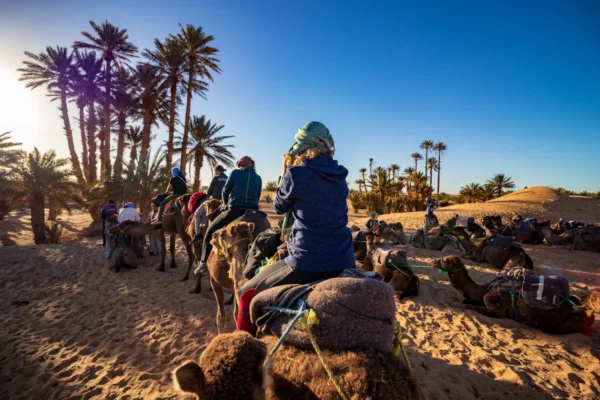
Yes, the desert cools down significantly after dark. Even in the summer, bring a warm sweater or a light down jacket. If you plan to sleep in a desert camp, a pair of warm socks is also a great addition. Don’t forget a flashlight or a headlamp, as lighting in nomadic camps can be dim at night.
Is it necessary to bring a formal outfit for dinners?
Generally, no. Most restaurants in Marrakech and beyond have a “smart casual” dress code. A clean linen shirt or a simple dress is perfectly acceptable for high-end dining. Morocco is a relaxed destination where comfort is prioritized over formal attire, though dressing up a little for a rooftop dinner in the Hivernage district is always a nice touch.
Can I easily find laundry services during the trip?
Most riads and hotels offer laundry services for a small fee, usually returned within 24 hours. In larger cities like Marrakech or Essaouira, you can also find local “pressings.” Because of this, you can easily pack for 7 days even if your trip lasts two weeks, provided you plan a laundry stop midway through your itinerary.
Conclusion: Ready for the Road
Packing for a Morocco road trip is about preparation rather than over-complication. By focusing on breathable fabrics, versatile layers, and the right tech, you free yourself to enjoy the sensory explosion that is the Kingdom of Morocco. Once your luggage is sorted and your logistics are in place, the only thing left to do is watch the changing colors of the Atlas Mountains from your window. The road is waiting, and with the right gear, you are ready to experience it in total comfort.
Trust your journey to Marrakech Private Driver. As a Ministry-licensed agency established in 2012, we provide professional transfers and excursions with over 500 satisfied traveler reviews. Let us handle the road while you enjoy the view.
WhatsApp: +212 600 000 000
Website: www.example-marrakech-transport.com